Frequency in Meta Ads: When Repetition Helps and When It Kills
Understand frequency in Meta Ads and how it affects performance. Learn optimal frequency by funnel stage, cap strategies, and when repetition helps versus hurts.
Frequency in Meta Ads measures how many times the average person in your audience has seen your ad. It is one of the most undermonitored metrics in paid social, yet it directly impacts cost efficiency, audience perception, and campaign longevity. Too low and people never notice you. Too high and they start hiding your ads. Understanding the sweet spot for frequency is essential for maintaining healthy campaign performance.
What Frequency Means in Meta Ads
Frequency is calculated as impressions divided by reach. If your ad has 10,000 impressions and reached 5,000 people, the frequency is 2.0. This means each person saw your ad an average of twice.
It is important to remember that frequency is an average. A frequency of 3.0 does not mean every person saw the ad exactly 3 times. Some may have seen it once while others saw it 10 times. The distribution is typically skewed, with a small percentage of your audience receiving a disproportionate share of impressions.
Optimal Frequency by Funnel Stage
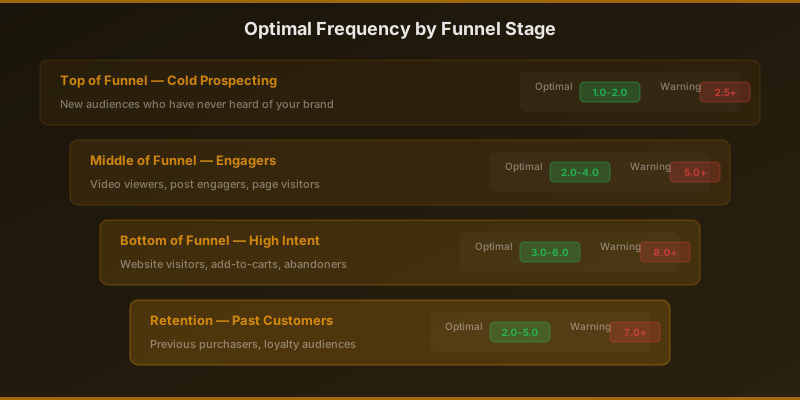
The right frequency depends heavily on where your audience sits in the buying journey. Cold audiences who have never heard of your brand have different tolerance levels than warm audiences who are already considering a purchase.
| Funnel Stage | Audience Type | Optimal Frequency | Warning Zone |
|---|---|---|---|
| Top of Funnel | Cold prospecting | 1.0 - 2.0 | Above 2.5 |
| Middle of Funnel | Engagers, video viewers | 2.0 - 4.0 | Above 5.0 |
| Bottom of Funnel | Website visitors, cart abandoners | 3.0 - 6.0 | Above 8.0 |
| Retention | Past customers | 2.0 - 5.0 | Above 7.0 |
Cold audiences hit saturation fastest because they have no existing relationship with your brand. Showing them the same ad five times feels intrusive. Warm audiences are more tolerant because they have already expressed interest. A cart abandoner seeing a reminder ad four times over a week is reasonable, not annoying.
Frequency Cap Strategies
Meta does not offer traditional frequency caps for most campaign objectives. In Reach and Frequency campaigns, you can set explicit caps, but for auction campaigns (the majority), frequency is managed indirectly through budget, audience size, and creative rotation.
How to Control Frequency Without Caps
- Expand your audience size. Larger audiences naturally distribute impressions more broadly, keeping frequency lower.
- Refresh creative regularly. New ads reset the fatigue clock even for the same audience.
- Use multiple ads per ad set. Running 3 to 6 ads in a single ad set allows Meta to rotate them, reducing repetition of any single creative.
- Monitor frequency daily and reduce budget or pause when thresholds are crossed.
- Use exclusions to remove people who have already converted, preventing wasted impressions on users who no longer need to see the ad.
The fastest way to bring down frequency is to increase audience size or add new creative. Budget reductions also work but come at the cost of reduced delivery.
Cold vs Retargeting Thresholds
Stop wasting ad budget
NovaStorm AI cuts Meta Ads CPA by 30% on average. Start free.
The frequency thresholds for cold and retargeting audiences are fundamentally different, and mixing them up is a common mistake.
For cold prospecting, frequency above 2.5 over a 7-day period is a warning sign. Performance typically degrades as frequency climbs because the algorithm is recycling through the same people rather than finding new ones. If frequency rises quickly on a cold campaign, it usually means the audience is too small for the budget.
For retargeting, frequency up to 5 or even 8 can work well. These people already know you. They visited your website, added to cart, or engaged with your content. Higher frequency here serves as a reminder rather than an intrusion. However, even retargeting has limits. Beyond a frequency of 8 to 10, negative feedback increases and performance drops off sharply.
Frequency vs Reach: The Tradeoff
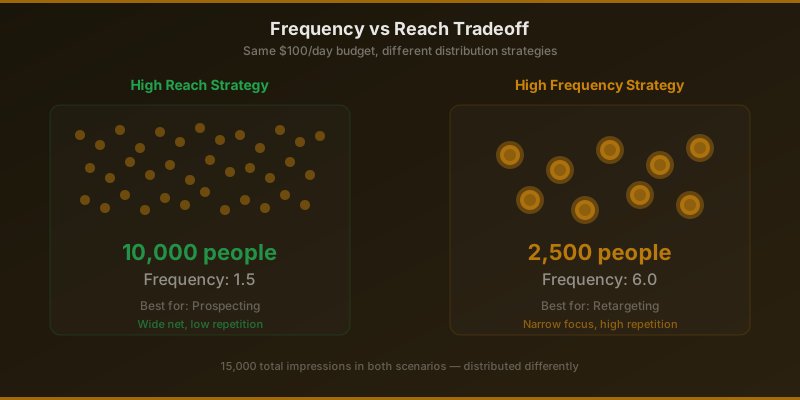
There is an inherent tradeoff between frequency and reach. With a fixed budget, you can either show your ad to more people fewer times (high reach, low frequency) or to fewer people more times (low reach, high frequency).
For prospecting, prioritize reach. You want to cast a wide net and find new potential customers. For retargeting, prioritize frequency within reason. You want to stay top of mind for people who are already in your funnel.
Managing Frequency at Scale
As you scale ad spend, frequency management becomes increasingly important. Higher budgets push more impressions into the same audience pools, naturally driving frequency up. Here are strategies for managing this at scale:
- Maintain a creative pipeline that introduces new ads every 1 to 2 weeks
- Use Advantage+ audience to let Meta explore beyond your defined targeting
- Segment your creative by placement so Stories, Reels, and Feed each get unique assets
- Build audience exclusion ladders that remove people after a set number of days without conversion
- Monitor frequency at the ad level, not just the ad set level, to catch individual creative fatigue early
When frequency is rising and CTR is falling simultaneously, you are experiencing ad fatigue. This is the most reliable signal that creative needs to be refreshed. Do not wait for CPA to spike. By then the damage to your audience perception is already done.
The Bottom Line on Frequency
Frequency in Meta Ads is neither good nor bad on its own. What matters is whether the frequency level is appropriate for the audience, the funnel stage, and the creative. Monitor it consistently, set clear thresholds for each campaign type, and have a creative refresh plan ready when those thresholds are crossed. Frequency management is not glamorous, but it is one of the most reliable ways to extend campaign life and maintain efficient performance over time.
Novastorm AI automates Meta Ads routine — from monitoring to optimization. Learn more at novastorm.ai
Disclaimer: This article was generated with the assistance of AI and reviewed by the NovaStorm AI team. While we strive for accuracy, we recommend verifying specific data points and consulting official sources (linked where available) for critical business decisions.
Ready to automate your Meta Ads?
NovaStorm AI takes full responsibility for your campaigns — from monitoring to optimization.
Get Started FreeRelated Articles
Retargeting Frequency: How Often Should You Show Ads to the Same Person
Find the optimal retargeting frequency for cold, warm, and hot audiences. Learn frequency cap strategies and when to stop showing ads to the same person.
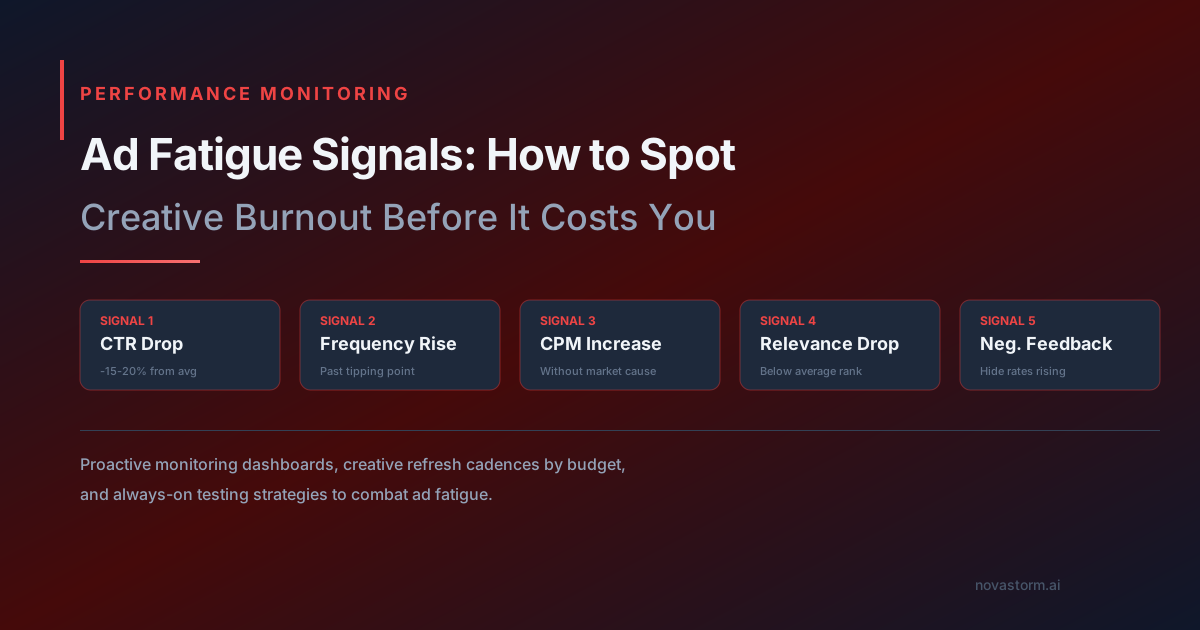
Ad Fatigue Signals: How to Spot Creative Burnout Before It Costs You
Learn the 5 early warning signs of ad fatigue on Meta. Set up monitoring dashboards, plan creative refresh cadences, and implement rotation strategies.
The Psychology of Color in Meta Ad Creative
Explore the psychology of color in Meta Ad creative. Learn how color associations, contrast, CTA button colors, and cultural meanings impact ad performance.